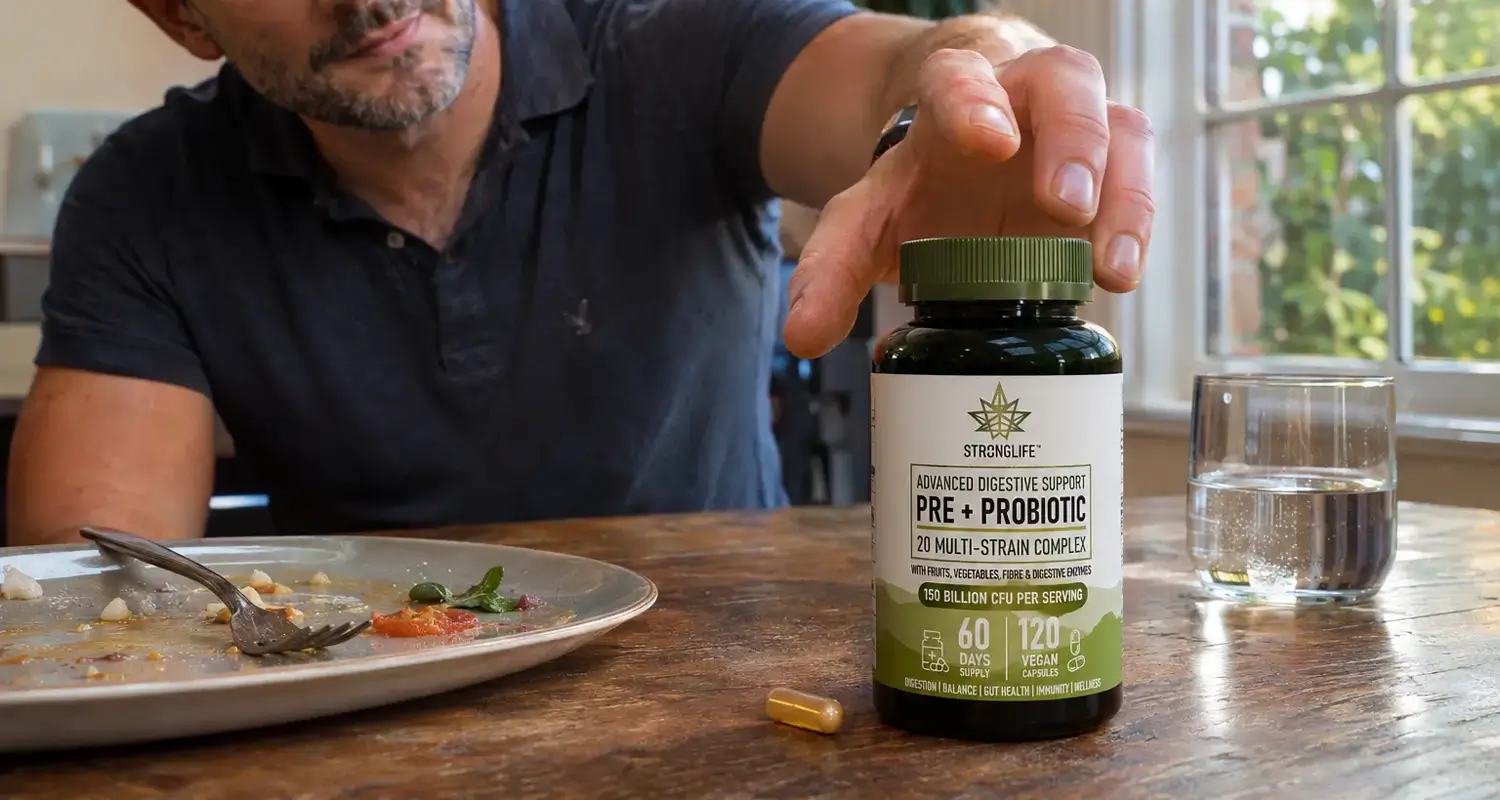

That burning sensation in your chest after a meal is more than just annoying; it can ruin your entire day. While reaching for Gaviscon is a common quick fix, many people are now asking if getting to the root of the problem with probiotics is a better long-term strategy. Could balancing your gut bacteria be the secret to extinguishing the fire of acid reflux for good?
Can probiotics help with reflux? Research suggests certain probiotics may reduce symptoms such as regurgitation, heartburn and upper digestive discomfort. Newer trials have added to that evidence, especially when probiotics are used alongside established treatment.
There is more to acid reflux than stomach acid alone. Your eating habits, the barrier between your stomach and oesophagus, and even digestive movement all matter. Scientists are also examining whether the gut microbiome has a part to play.
Here is what the research actually found, which probiotic strains have been studied and how to decide whether a supplement belongs in your approach.

Can Probiotics Help With Reflux?
Yes, probiotics may help with some acid reflux symptoms, although results depend on the strains studied and the person taking them. Researchers have reported improvements in regurgitation, heartburn and related upper digestive complaints. That makes probiotics for acid reflux an interesting area of research rather than another passing wellness trend.
A 2020 systematic review reported a positive outcome in 11 of 14 probiotic comparisons. However, only five of those positive comparisons specifically involved reflux symptoms; others looked at problems such as nausea and belching.
In January 2026, a randomised clinical trial also reported improved reflux symptom scores with a particular multi-strain probiotic used alongside standard medication.
So, can probiotics help with reflux for everyone? Not necessarily. These are promising findings, not proof that every live-culture capsule will work or that a probiotic can replace prescribed reflux treatment.
What Causes Acid Reflux and GERD?
Acid reflux happens when stomach contents travel backwards into the oesophagus, the tube carrying food to your stomach. A muscular valve called the lower oesophageal sphincter (LES) normally helps keep those contents where they belong.
If the valve relaxes when it shouldn’t, or doesn’t close effectively, acidic stomach contents can move upwards. That can produce the familiar burning sensation behind the breastbone.
The NHS explains that symptoms can include heartburn, a sour taste, recurrent coughing, hoarseness, bloating and nausea. They’re often worse after eating or lying down.
Occasional reflux is common. When it becomes frequent or troublesome, it may be diagnosed as gastro-oesophageal reflux disease, known as GORD in the UK or GERD in American terminology.
Why Can Reflux Get Worse After Eating?
Large meals can leave your stomach feeling particularly full. Fatty foods, coffee, alcohol, chocolate and certain spicy meals can trigger symptoms for some people. Smoking, excess weight, pregnancy and a hiatus hernia may also contribute.
Not everybody has the same triggers. Your own symptoms after particular meals are more useful than following a long list of foods you’re told never to eat.
What Have Gut Bacteria Got to Do With Reflux?
Your gut microbiome is made up of trillions of microorganisms, including bacteria involved in processing food and interacting with your digestive system. Scientists have spent years studying its role in intestinal health, and interest in the upper digestive tract is growing.
Changes in gut bacteria have been observed in some digestive conditions. Researchers are exploring whether these changes influence digestive movement, microbial by-products and the discomfort experienced alongside reflux.
The important point is that acid reflux isn’t simply caused by having the wrong bacteria. The main mechanical problem usually involves the barrier between the stomach and oesophagus.
Nevertheless, research into probiotics and GERD asks a useful question: could supporting particular digestive processes reduce some of the symptoms people experience?
How Might Probiotics Influence Digestion?
Some probiotic strains have been studied for their effects on intestinal movement, microbial metabolites and digestive comfort. In theory, those interactions could influence symptoms linked with stomach fullness, belching or regurgitation.
These proposed mechanisms are not all firmly established in people with GERD. But they help explain why researchers have tested probiotics alongside conventional reflux care.
What Does the Research Say About Probiotics for Acid Reflux?
There are two useful findings worth knowing about, plus some important limitations.
The 2020 Systematic Review
The review included 13 prospective studies and 14 probiotic comparisons. Eleven comparisons reported improvement in at least one upper digestive symptom, while five positive comparisons specifically involved reflux symptoms. Three reported reduced regurgitation.
This is encouraging, but the included studies used different strains and measured different outcomes. Only five of the 14 comparisons were rated high-quality by the review authors, so the results cannot be treated as one universal effectiveness figure.
The 2026 Trial in 120 People With GERD
A 2026 double-blind trial assigned 120 participants to the proton pump inhibitor rabeprazole plus either a named multi-strain probiotic or a placebo. After eight weeks, they continued their assigned supplement or placebo for another four weeks without rabeprazole.
At week 12, the probiotic group had a reported 36.51% reduction in reflux questionnaire scores compared with the placebo group. The researchers also observed changes in gut bacteria and microbial metabolites.
That is a meaningful result for the formulation investigated. It does not mean any 20-strain probiotic will produce the same benefit, because the strains and formulation matter.
What Do Other Reviews Show?
A 2023 systematic review and meta-analysis found symptom improvement with probiotic yoghurt in one study. Other dietary and supplement interventions produced mixed results.
Taken together, the evidence suggests probiotics for acid reflux are worth researching further, especially as an addition to established care. It doesn’t yet identify a single best product or a guaranteed outcome.
What Is the Best Probiotic for Acid Reflux?
The best probiotic for acid reflux hasn’t been established. Different strains have different properties, and results from one trial cannot automatically be applied to another product.
The 2020 review discussed strains including Bifidobacterium bifidum YIT 10347 and Bifidobacterium animalis subsp. lactis HN019. Some studies involving these strains reported improvements in regurgitation.
Research into probiotics and GERD has also investigated multi-strain formulations, including the specific combination used in the 2026 trial. This is one reason to look at strain identifiers, rather than judging a supplement entirely by its CFU number.
CFU, or colony-forming units, is a measure of viable microorganisms. A higher count doesn’t automatically mean greater relief from heartburn.
Are Multi-Strain Probiotics Better?
Multi-strain products contain several types of bacteria, often from the Lactobacillus and Bifidobacterium groups. They provide variety, but more strains aren’t always better for a particular symptom.
If you’re comparing probiotics for heartburn or wider digestive support, check the actual formulation, intended serving and evidence for the strains involved.
Prebiotics vs Probiotics: What’s the Difference?
Probiotics are live microorganisms that may offer health benefits when consumed in adequate amounts. Prebiotics are substrates, often specialised fibres, that beneficial microorganisms can use.
| Type | What it provides | Why someone might choose it |
|---|---|---|
| Probiotics | Selected live microorganisms | To explore targeted microbiome supplementation |
| Prebiotics | Substrates used by beneficial microbes | To provide fermentable ingredients for gut microorganisms |
| Synbiotics | Probiotic organisms combined with a substrate | To include both components in one formulation |
For more on the differences, explore our prebiotics and probiotics range.
Prebiotic fibres can increase gas or bloating in some people. That matters when comparing probiotics for heartburn, particularly if stomach pressure already seems to worsen your reflux symptoms.

Stronglife Prebiotic & Probiotic Complex: What Does It Contain?
If you’re exploring broader gut microbiome support, it makes sense to compare products by what is actually in the bottle rather than by bold promises on the label. Not every formula marketed as probiotics for acid reflux has been studied for that purpose.
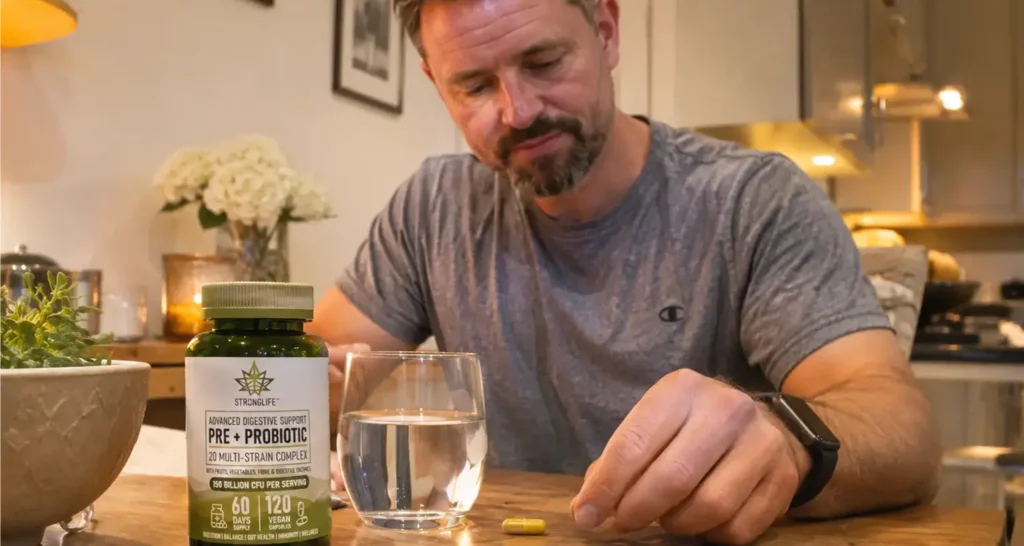
Stronglife Prebiotic & Probiotic Complex Capsules combine live cultures, prebiotic ingredients and digestive enzymes. The current listing describes:
- 150 billion CFU per two-capsule serving, across a 20-strain blend.
- Live cultures from groups including Lactobacillus and Bifidobacterium.
- Prebiotic ingredients and a digestive enzyme blend including amylase, bromelain, cellulase, lipase and papain.
- 120 vegan capsules in each bottle.
The formula is an option to consider when comparing multi-strain supplements for general digestive and microbiome support. You can also browse our wider gut health supplements range to understand the different formats available.
A vital distinction: the studies above did not test this exact Stronglife product, so their reflux results cannot be claimed as proven benefits of these capsules. If you have GERD or take prescribed medication, ask your pharmacist or GP whether adding a supplement is appropriate.
How Long Do Probiotics Take to Work for Acid Reflux?
There’s no established number of days that applies to all probiotics. Research trials use different treatment periods, bacterial strains and ways of measuring symptoms.
Research into probiotics and GERD often measures changes over several weeks. The 2026 trial assessed outcomes over 12 weeks, but its participants also received rabeprazole during the first eight. It would be misleading to use that as a promise that an over-the-counter supplement works within 12 weeks.
If you decide to try a probiotic for general digestive support, follow its label, notice any changes in bloating or discomfort, and don’t delay an assessment for persistent reflux.
Can Probiotics Make Acid Reflux Worse?
Probiotics are generally well tolerated by healthy adults, but some people notice gas, bloating or changes in their bowel movements after starting a new product. Prebiotic fibres can contribute to those symptoms too.
Extra bloating may make existing digestive discomfort feel worse, even if the supplement isn’t directly increasing stomach acid. If symptoms consistently worsen, stop the product and seek advice.
The NCCIH’s probiotics guidance also notes that safety considerations differ for people with serious illnesses or weakened immune systems. Those groups should seek medical advice before taking live-culture supplements.

What Else Helps Acid Reflux and Heartburn?
The NHS recommends several practical measures that can help reduce reflux symptoms:
- Eat smaller, more frequent meals if large meals trigger discomfort.
- Identify the foods and drinks that cause symptoms for you.
- Avoid eating within three to four hours before going to bed.
- Raise the head of your bed by approximately 10 to 20cm if night-time reflux is a problem, rather than adding extra pillows.
- Discuss suitable pharmacy treatments, such as antacids or alginates, when symptoms are occasional.
If reflux happens most days, a GP may recommend treatment with a proton pump inhibitor such as omeprazole or lansoprazole. These reduce stomach acid production and have a much stronger established role in GERD care than probiotics.
When Should You Get Medical Advice?
Speak to your GP if reflux is frequent, pharmacy remedies aren’t helping, you have trouble swallowing, you keep vomiting or you’re losing weight without trying.
Sudden or severe chest pain, particularly with breathlessness, sweating or pain spreading to the arm or jaw, needs emergency assessment. Call 999 if you think you may be having a heart attack.
Frequently Asked Questions
Can Probiotics Help With Reflux and Heartburn?
Yes, certain studies suggest they may reduce some symptoms, including regurgitation or upper digestive discomfort. However, effects vary across formulations, and they aren’t an established substitute for reflux medication.
What Is the Best Probiotic for Acid Reflux?
No single strain or product has been proven best. Some studies have investigated specific Bifidobacterium strains and multi-strain products, but results cannot automatically be transferred between supplements.
Can Probiotics Help With Silent Reflux?
Evidence specifically for laryngopharyngeal reflux, sometimes called silent reflux, is limited. Persistent coughing, hoarseness or throat symptoms deserve assessment rather than an assumption that probiotics will fix them.
Are Probiotics Better Than Antacids?
They work differently. Antacids neutralise acid for short-term relief; probiotics interact with the digestive microbiome. Probiotics aren’t proven replacements for antacids or prescribed GERD treatment.
Can I Take Probiotics With Omeprazole?
Some studies have examined probiotics alongside proton pump inhibitors. Check with your pharmacist or GP before combining any supplement with prescribed treatment, particularly if you have other health conditions.
Can Probiotics Help With Reflux After Eating?
They might improve certain digestive symptoms for some people, but meal size, trigger foods and lying down after eating are established factors. Smaller meals and avoiding late-night eating are useful steps to consider first.
Do Probiotics Reduce Stomach Acid?
Probiotics for heartburn haven’t been established as medicines that directly reduce acid production. Any potential effect on reflux symptoms is thought to involve other digestive processes and is still being studied.
Final Thoughts: Can Probiotics Help With Reflux?
Can probiotics help with reflux? The answer is promising, but not universal. Research has identified improvements with certain strains and formulations, including an encouraging 2026 trial alongside standard medication.
That doesn’t mean you need to choose between looking after your microbiome and treating reflux properly. The two approaches can be considered separately, with your own symptoms and medical history guiding the decision.
If you’re comparing live-culture supplements for everyday digestive support, Stronglife Prebiotic & Probiotic Complex provides a 20-strain formulation with prebiotic ingredients. For frequent reflux, appropriate medical assessment remains important.
References
- NHS: Heartburn and acid reflux
- NCCIH: Probiotics, usefulness and safety
- Su et al. (2020): Gastroesophageal reflux disease and probiotics, a systematic review
- Li et al. (2026): Adjunctive probiotic therapy in GERD
- Systematic review and meta-analysis of dietary and probiotic interventions (2023)
- American College of Gastroenterology: GERD clinical guideline